
Operational Architecture
The system was resilient. The operation wasn't. That is the gap where failures live.
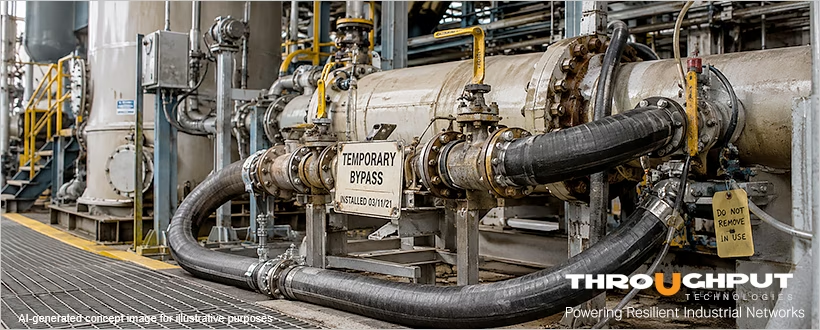
The network passed every test. Redundancy was verified. Recovery was validated. Commissioning was signed off. Every system was resilient.
The operation failed anyway.
The network didn't fail. The equipment didn't fail. The configuration didn't fail. The operation failed.
Operator turnover. Missing documentation. Vendor dependence. Knowledge loss. Shift handover. Alarm fatigue. Nobody owns the system between the systems.
What Is Operational Architecture?
Operational architecture is the engineering discipline that ensures operations remain resilient when systems are resilient.
We spend years making systems resilient. We spend almost no time making operations resilient. That is the gap where failures live.
Systems are commissioned. Operations are not. Systems are tested. Operations are not. Systems are documented. Operations are not.
Why Systems Fail Operationally
Most persistent industrial failures are not caused by technology. They are caused by operational decay.
The network was designed correctly. The installation was correct. The commissioning was correct. The system was resilient.
Then the operation began.
The engineer who knew the network left. The documentation was never updated. The vendor who did the commissioning moved on. The shift handover became routine. The alarms became noise. Normal behaviour changed gradually. The team stopped understanding how the system actually worked.
The failure was not a network failure. It was an operational failure.
The Operation Is Never Commissioned
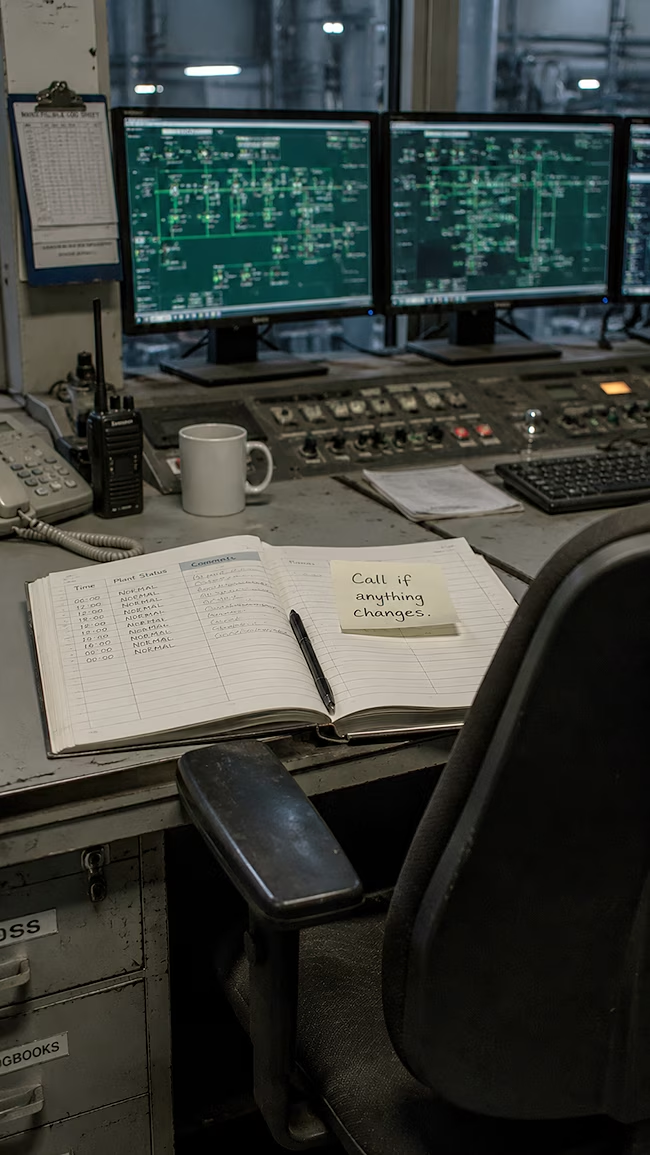
The system says normal. The operation knows otherwise.
Systems are commissioned. Operations are not.
Commissioning proves that the system works at a moment in time. It does not prove that the operation will work over time.
The operation is not commissioned. It evolves. People leave. Knowledge is lost. Documentation becomes outdated. Normal behaviour drifts. Operators change. Vendors change. Practices change.
The system remains resilient. The operation becomes fragile.
What Operational Architecture Requires
Operational architecture is not a product. It is not a technology. It is a discipline.
Vendor Independence
The operation should not be dependent on a single vendor's expertise. If the vendor leaves, the operation should still work.
Vendor dependence is often invisible until it becomes a crisis. The system works because a vendor supports it. The documentation is incomplete because the vendor holds the knowledge. The operation is fragile because the vendor is the only one who understands it.
Ownership of the System Between the Systems
The architecture between systems must be owned by someone. It cannot be nobody's responsibility.
Every supplier fulfilled their scope. The operation still failed. The gap was not in any individual scope. It was in the architecture between them.
The System You Designed Is Not The System Being Operated
Every change, every modification, every workaround changes the system. The operation evolves. The documentation does not.
The network you designed is not the network being operated.
Small changes accumulate. Temporary workarounds become permanent. Documentation becomes outdated. Knowledge becomes distributed. Normal behaviour shifts gradually.
By the time the failure occurs, the system being operated is not the system that was designed.
Technology In Practice
Operational architecture extends beyond technology. It is a discipline that encompasses people, knowledge, and process.
Westermo provides the underlying network infrastructure that supports operational continuity through deterministic behaviour and forensic visibility.
Secomea enables secure remote access that preserves operational context across shifts and locations.
These are different capabilities contributing to a coherent operational outcome. The technology exists. The operational discipline must be designed to use it.
The Strategic Takeaway
The network was resilient. The operation wasn't.
Redundancy, recovery, and commissioning all passed. The system failed anyway.
Because the operation was never designed.
Operational architecture is the engineering discipline that closes the gap.
DESIGN FOR OPERATIONAL RESILIENCE
Throughput advises on operational architectures that bridge the gap between system resilience and operational resilience - aligning knowledge retention, documentation discipline, and operational continuity with proven industrial technologies.
When was the last time you assessed your operation's resilience—not just your system's?