
Underground Communications
Designing networks for underground mining – leaky feeder systems, Wi‑Fi coverage, personnel & equipment tracking, and reliable communications in confined, hazardous environments.
Modern mining depends on robust industrial networks that connect underground operations, surface processing, mobile fleets, and control centres. These networks must survive extreme conditions, ensure worker safety, maintain continuous production, and protect critical infrastructure from cyber threats.
Mining operations span vast areas – from kilometres underground to extensive surface pits and processing plants. Networks must deliver reliable communications, real‑time data from equipment, video surveillance, safety system alerts, and control signals. The environment is harsh: dust, vibration, temperature extremes, and electromagnetic interference demand industrial‑grade hardware and resilient design.
Digital transformation in mining introduces autonomous haulage, remote operation centres, predictive maintenance, and integrated safety systems. Each advancement increases network dependency. Network architecture must accommodate bandwidth‑intensive applications like 3D mapping and video analytics while maintaining deterministic performance for safety‑critical systems like gas monitoring and equipment control.
Mining networks face unique constraints: limited fibre paths underground, moving equipment in pits, explosive atmospheres in certain zones, and the need for minimal downtime. Design must consider redundancy for continuous operation, latency requirements for real‑time control, and cybersecurity for protecting production systems and intellectual property. Networks also evolve as mines expand – requiring scalable architectures that grow with the operation.
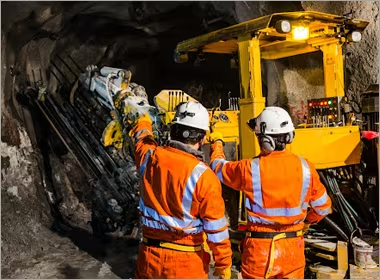
Designing networks for underground mining – leaky feeder systems, Wi‑Fi coverage, personnel & equipment tracking, and reliable communications in confined, hazardous environments.
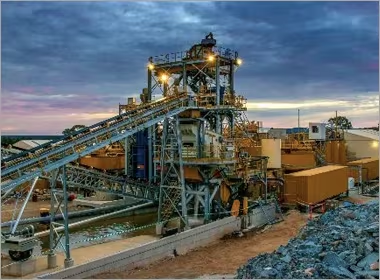
Network infrastructure for surface mining – pit communications, processing plant control networks, conveyor monitoring, and connectivity across extensive, harsh surface environments.
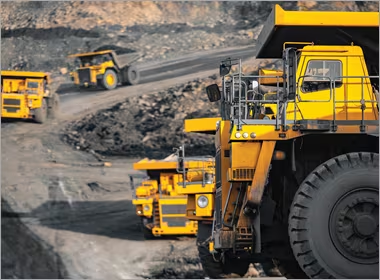
Enabling reliable communications for haul trucks, drills, shovels, and autonomous vehicles across pit operations, haul roads, and maintenance areas.

Securing mining networks – OT cybersecurity, intrusion protection, network redundancy, and designing resilient infrastructure that maintains operations during incidents or attacks.
Throughput partners with manufacturers offering ruggedised solutions for mining environments. Westermo industrial switches provide reliable connectivity in dusty, vibrating conditions with EN 50155 compliance for mining transport systems. Welotec edge computing and IoT gateways enable real‑time analytics at processing plants and substations. ProSoft Technology wireless solutions deliver connectivity for mobile fleet telematics and underground communications. ATOP Technologies DIN‑rail switches with precision timing support control networks in harsh mining conditions. Secomea secure remote access enables monitoring and maintenance of distributed mining equipment. FlexDSL SHDSL modems extend network reach to remote mining sites over existing copper infrastructure.
Mining technology advances rapidly – autonomous vehicles, digital twins, AI‑driven optimisation, and integrated pit‑to‑port operations. Networks must evolve to support increased data volumes, lower latency requirements, and more connected devices. Future‑ready designs incorporate: 5G private networks for mobile equipment, edge computing for real‑time analytics, software‑defined networking for flexible traffic management, and zero‑trust architectures that secure expanding digital perimeters without impeding operational efficiency.
Each topic above addresses a critical component of mining network infrastructure, providing practical guidance for mining engineers, network designers, and operations managers implementing digital transformation in extractive industries.