
The Network Recovered. The Problem Did Not.
Recovery hides root cause. Here is what you are missing when your network comes back online too fast.
The network was designed in 2016. The specification was approved. The equipment was installed. A decade later, it fails in ways no one predicted. The decisions made then are still shaping the failures of today.
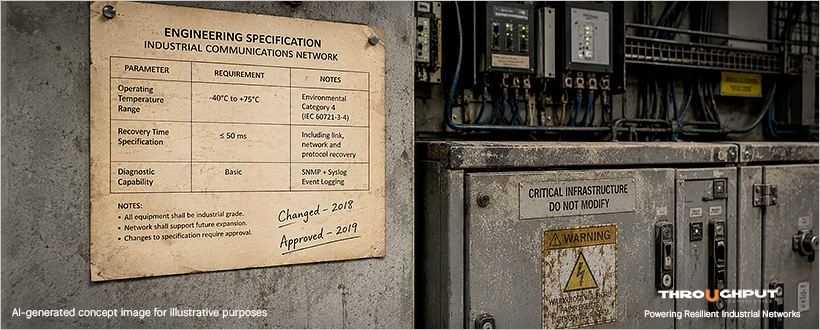
The root cause is not a single component. It is a decision made years ago. A decision that seemed minor at the time. A decision that no one remembers making.
The decision is whether to specify for the environment or specify for the budget. Most organisations choose the budget. The choice is rational. It is also expensive.
Design decisions are the hidden architecture of failure. They are invisible, unexamined, and still shaping how your network behaves today.
The standard industry advice is sound. It is also incomplete. The gaps in the specification become the gaps in the system.
The standard industry advice is "specify to the requirements." It is sound advice. It is also insufficient. The requirements are often incomplete. The engineer specifies what they know. They do not specify what they do not know. The gaps in the specification become the gaps in the system.
The advice to specify to the requirements is correct. It is also incomplete. The requirements that are missing are the requirements that will become failure modes.
A specification is only as good as the engineer who writes it.
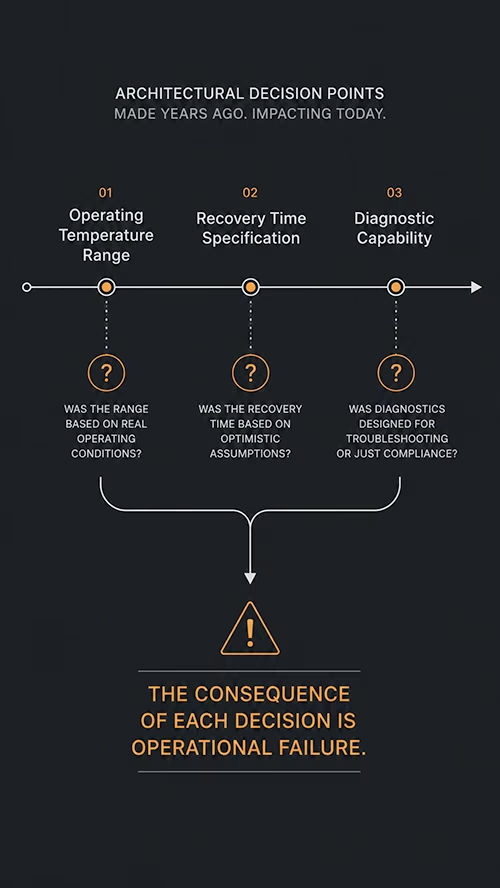
Three decisions that determine long-term reliability.
The advice to specify to the requirements is correct. It is also incomplete. The environment is often more demanding than the requirements.
The advice to specify to the requirements falls short because it does not address the environment. The environment is often more demanding than the requirements. The specification says the switch works between -40°C and +70°C. It does not say what happens when the temperature cycles rapidly. It does not say what happens when the power supply voltage sags. It does not say what happens when the switch is loaded to 90% capacity.
The advice also falls short because it does not address recovery. The specification says the switch will recover in 50ms. It does not say what happens during a restart. It does not say what happens during a failover. It does not say what happens when every device reconnects simultaneously.
The gap between the specification and the environment is the gap where failures live.
The factors that actually determine long-term reliability are not the specifications. They are the assumptions embedded in the specifications.
The factors that actually determine long-term reliability are not the specifications. They are the assumptions embedded in the specifications.
Operating temperature range – Is it tested under cycling, not just steady state? The specification says the switch works between -40°C and +70°C. It does not say what happens when the temperature cycles rapidly. The cycling is often more damaging than the extremes.
Recovery time specification – Is it tested under load, not idle? The specification says the switch recovers in 50ms. It does not say what happens when the network is busy. The recovery time under load is often longer than the recovery time under idle.
Diagnostic capability – Does the device retain event logs across power cycles? The specification says the device logs events. It does not say what happens to the logs during a restart. The logs that disappear during a restart are the logs that would have revealed the root cause.
The outcome changes when organisations move from specifying to requirements to specifying for the environment.
The outcome changes when organisations move from specifying to requirements to specifying for the environment. The environment is the real requirement. The specification is just a document.
Specifying for the environment is the difference between a system that survives and a system that fails gracefully.
The cost of specifying for the environment is small. The cost of not specifying for the environment is large. The network that was designed in 2016 is failing in 2026. The decisions made in 2016 are still shaping the failures of today.
The specification you sign today will define your network's failure modes for the next decade. Westermo's WeOS architecture, ProSoft's migration gateways, and Welotec's edge computing platforms are designed to maintain predictable behaviour over long operational lifecycles.
The partner does not replace the specification. It supports it. The specification is the foundation. The partner is the structure.
Review your current specifications. Identify the assumptions embedded in them. Test those assumptions against your operating environment.
Audit your installed equipment. Compare it to the original specification. Identify the gaps. Close them.
Document the dependencies. Every component has dependencies. The dependencies that are not documented are the dependencies that will fail.
Create a specification review process. The process that approved the original specification should review it periodically.
Throughput advises on specification review, architecture design, and lifecycle planning.
What decision did you make years ago that is still defining your failure modes today?
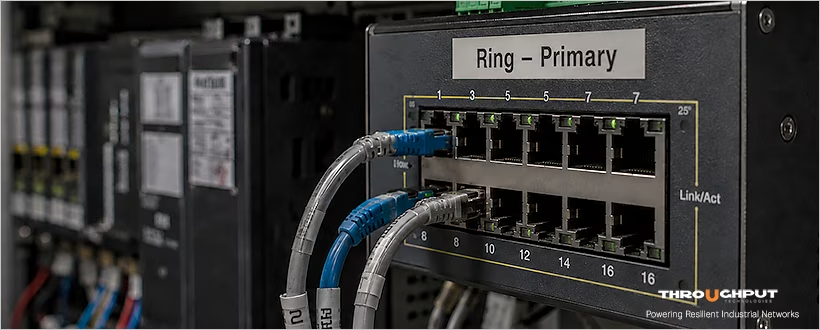
Recovery hides root cause. Here is what you are missing when your network comes back online too fast.
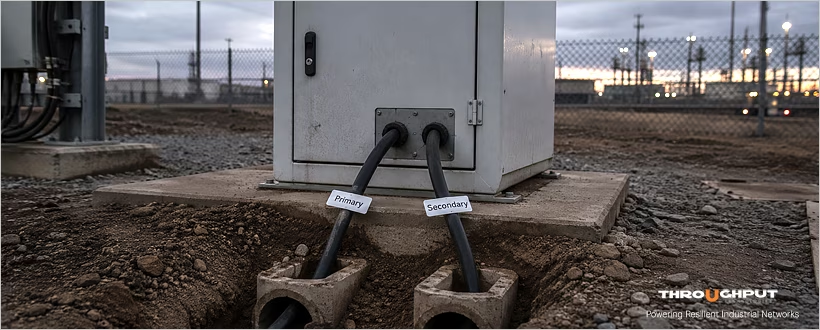
Redundancy adds paths. It does not guarantee predictable recovery. Here is why redundancy is not resilience.
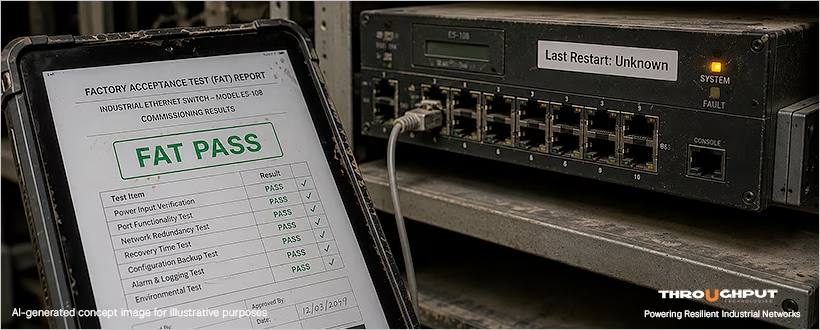
Your FAT passed. Your site failed. The test never simulated a restart. Here is what commissioning misses.